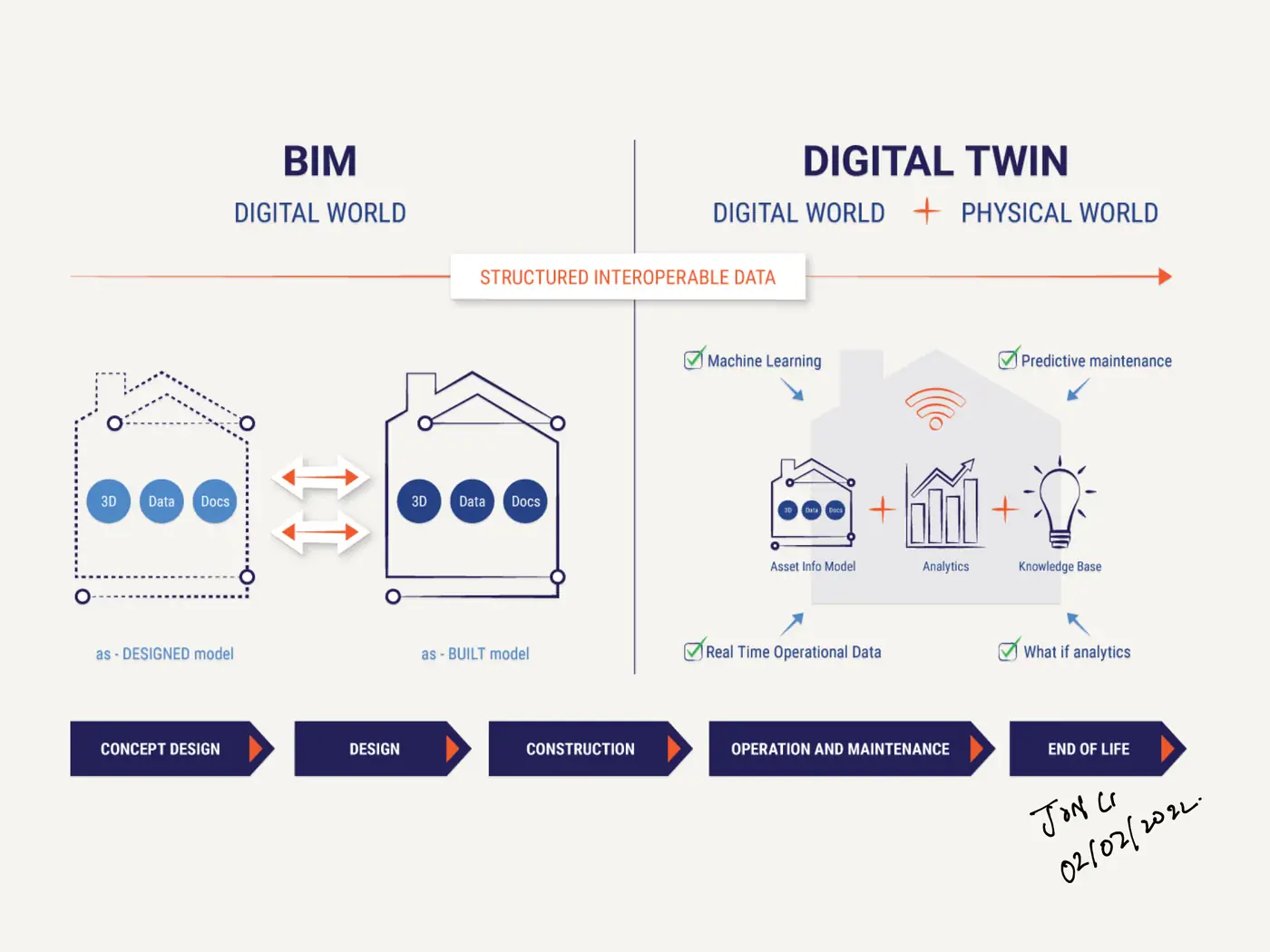
For over 2 decades, BIM has enabled built environment industry professionals to share information in a single, shared project-based set of objects and systems. It helps clients to understand design and engineering choices visually. It allows the creative team to test options on the layout of critical services virtually. And it outputs vital documentation and enables greater collaboration. And with a well-designed BIM execution plan in place, the technology adds value from project inception all the way through operation, becoming a key source for future digital twins and day-to-day asset management processes. Facility and property managers are now more and more interested in BIM. This doesn’t come as a surprise given the fact that BIM contains a great deal of relevant information for Facility Management. For instance, information about the geometry of a building or data regarding its components such as technical installations. And in the coming weeks, we'd be sharing how we model and visualise BIM models for building data leveraging on a AI-based workflow and pipeline. Watch this space.